I’m Exploring Franchising
Learn the basics and discover whether franchise ownership could be right for you.
The best decisions are informed decisions. Whether you’re exploring franchise ownership, evaluating opportunities, or preparing for your next step, these articles, guides, videos, and resources are here to help you move forward with clarity and confidence
Not sure where to begin? Start with the resources that best match where you are in your business ownership journey.
Learn the basics and discover whether franchise ownership could be right for you.
Get practical guidance on evaluating franchise brands, investments, and business models.

Learn what questions to ask and what to look for before making a decision.
Explore articles, videos, guides, and other resources at your own pace.
Explore practical resources created to answer your questions, simplify the process, and help you make informed business decisions with confidence.

Lately, almost every conversation I have seems to include some version of the same concern.
What about the economy? What about inflation? What happens after the election? What is AI going to do to my industry—or my job? Should I just wait?
They’re reasonable questions.
But here’s the problem:
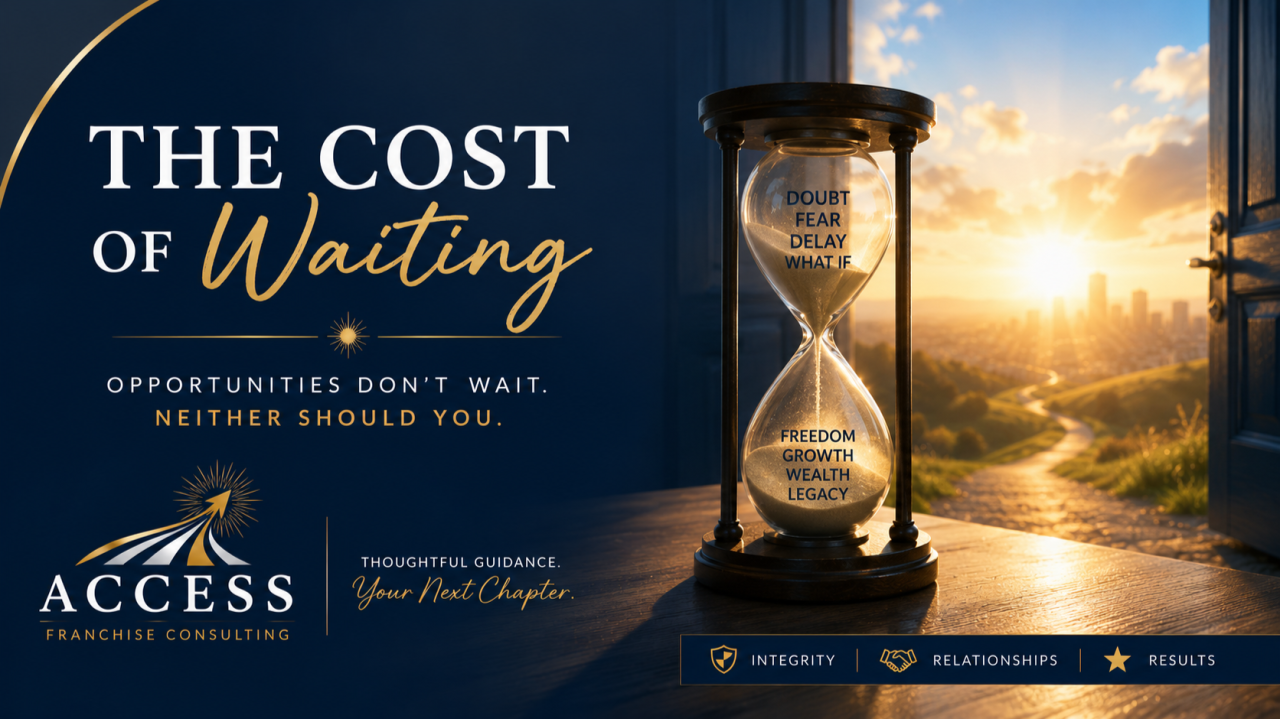
There will always be a reason to wait.
I’ve been a business owner through good economies and bad ones. I’ve watched industries change, technology change, consumer behavior change and entire business models evolve.
I’ve never seen a moment when someone rang a bell and announced:
Everything is stable now. You may safely make your big life decision.
That moment doesn’t exist.
And I don’t think the answer is to ignore uncertainty or take reckless risks. Quite the opposite.
Understand what you can control. Know your financial boundaries. Ask better questions. Do the due diligence. Understand what could go wrong. And decide whether the opportunity in front of you still makes sense.
Because waiting is a decision, too.
Staying in a job you’re worried may change is a decision.
Keeping all of your eggs in one income basket is a decision.
Putting off the business you’ve been thinking about for another year is a decision.
Sometimes waiting is absolutely the right answer.
But make sure you’re waiting for a reason—not waiting for certainty.
Because certainty isn’t coming.
Clarity can.
And those are two very different things.
One of the first questions people ask when they begin exploring franchise ownership is:
“What kind of franchise should I buy?”
Laundry. Fitness. Automotive. Home services. Pet care. Restaurants.
It seems like the logical place to start.
But increasingly, I think it’s the wrong question.
Because the industry someone is initially attracted to doesn’t always tell me very much about the business they actually want to own.
Someone may tell me they want a laundromat.
But after talking for a while, I may discover that what they really want is an asset-based business with limited employees, predictable demand, and the ability to operate semi-absentee.
Someone else may tell me they’re interested in automotive.
What they may really be saying is that they like tangible businesses with equipment, straightforward services, and employees who perform the work while they manage the operation.
And someone who loves fitness, animals, children, or food may discover that they have absolutely no desire to operate a business in any of those industries.
What you enjoy as a consumer and what you want to own are two very different things.
That’s why some of the most important conversations I have with prospective franchise owners have very little to do with brands.
Instead, we talk about the life they’re trying to build.
How many hours do you want to work?
Do you want employees?
Do you enjoy sales?
Do you want to interact with customers every day—or would you rather someone else handle that?
Do you want a storefront, vehicles, equipment, routes, recurring contracts, memberships, or something largely managed from an office?
Are you looking for another career?
An income-producing asset?
Something you can scale?
Something your children could eventually participate in?
A path out of corporate America?
Or simply another source of income?
Those answers tell me far more than “I want a laundry.”
The industry still matters. The economics matter. Territory matters. Investment matters.
But first, we need to understand the ownership model that fits the person.
Sometimes that means the business we ultimately explore looks nothing like the one that started the conversation.
And that’s not a failure of the process.
That IS the process.
My job isn’t to take the first franchise category someone mentions and find them one to buy.
It’s to keep asking questions until we understand what they’re actually trying to build.
So if you’re considering franchise ownership, maybe don’t start with:
“What should I buy?”
Start with:
“What do I want to own—and what do I want ownership to make possible?”
That’s when the conversation gets interesting.
When people evaluate a franchise, it’s easy to focus on the things that look good on a spreadsheet.
Margins. Recurring revenue. Labor. Overhead. Scalability. Territory.
All important.
But there’s another question I think deserves just as much attention:
Because consumers don’t experience your Item 19.
They don’t care how efficient the operating model is or how impressive the franchise presentation looked.
They experience how easy it was to book an appointment. Whether someone showed up when they said they would. How they were greeted when they walked through the door. Whether the service felt personal. Whether the process was convenient. And ultimately, whether they’d choose that business again.
That’s one reason I think customer experience is becoming an increasingly important differentiator in franchising.
We’re seeing brands rethink how services are delivered, make greater use of technology and convenience, introduce new formats, personalize experiences for local markets, and look for more ways to keep customers engaged beyond a single transaction.
And I think that matters for prospective franchise owners, too.
When I owned my franchise, I learned that customers rarely remember every detail of a transaction.
They remember how your business made them feel.
Did they trust you?
Did you make their life easier?
Did they feel valued?
Would they tell a friend about you?
Those things may sound less measurable than revenue or EBITDA, but over time they can show up in some very measurable places: repeat business, referrals, reviews, retention, and brand loyalty.
So when I help someone evaluate a franchise today, I’m interested in more than whether the economics make sense.
I want to understand the customer journey.
Who is the customer?
Why do they choose this brand instead of the alternatives?
What problem does the business solve—or what experience does it create?
What makes someone come back?
And perhaps most importantly:
That last question can be surprisingly revealing.
A strong franchise system gives an owner a model, processes, training, tools, and a brand.
But the businesses that stand out are often the ones that remember there’s a human being on the other side of all of it.
The model may get someone through the door. The experience is what brings them back.
And in an increasingly crowded marketplace, that may be one of the most important competitive advantages a business can build.
When people ask me which franchise categories are “hot” right now, I usually hesitate before answering.
Because “hot” isn’t necessarily what I’m looking for.
Trends come and go. What interests me more are the categories being driven by lasting changes in how we live, work, spend our money, care for our families, and prioritize our time.
And in 2026, several franchise categories stand out.
According to the International Franchise Association’s 2026 Franchising Economic Outlook, U.S. franchising is expected to reach approximately 845,000 establishments and generate more than $920 billion in economic output this year.
But the more interesting story is where that growth is happening — and why.
Here are five categories I’m watching closely.
This one probably won’t surprise anyone who follows me.
Home services continue to attract attention because many of these businesses provide something consumers need rather than simply want.
Homes age. HVAC systems break. Lawns grow. Pests arrive uninvited. Things need to be repaired, maintained, cleaned, improved, and replaced.
The commercial and residential services franchise sector is projected to grow output by approximately 3.2% in 2026, making it one of the fastest-growing areas in franchising.
Many concepts also offer characteristics today’s buyers find attractive: lower overhead than traditional retail, mobile or home-based operations, recurring revenue potential, and services that are difficult to replace with technology.
AI may be able to write your email.
It still can’t repair your plumbing.
Wellness has evolved far beyond the traditional gym.
Today’s franchise landscape includes boutique fitness, recovery, mobility, preventive wellness, mental health services, home healthcare, and senior care.
Health and wellness is now the third-largest franchised industry by number of establishments, with more than 99,000 locations projected in 2026.
Part of this growth comes from younger consumers prioritizing health and experiences differently than previous generations. At the other end of the demographic spectrum, an aging population is creating sustained demand for services that help people remain healthy, active, and independent longer.
Those are not short-term trends.
They represent fundamental demographic and lifestyle changes.
Parents have historically been willing to invest in their children — and today’s parents have more options than ever.
STEM programs. Tutoring. Sports and fitness. Music. Art. Coding. Early education. Academic enrichment.
Child services are projected to be among the fastest-growing sectors in franchising in 2026.
What makes this category particularly interesting is that many concepts provide more than childcare. They help parents give their children skills, experiences, confidence, and opportunities.
That’s an emotional purchase as much as an economic one — and when a business can combine meaningful impact with recurring demand, I pay attention.
Anyone who knows me knows I couldn’t leave this one off the list.
Pets aren’t simply pets anymore.
They’re family.
And consumers increasingly spend accordingly.
Grooming, boarding, daycare, training, wellness, veterinary-related services, specialty products, and other pet-focused businesses continue to expand as owners prioritize the health and quality of life of their animals.
It’s also a category where convenience matters enormously. Busy pet owners aren’t just buying a service; they’re often buying trust, reliability, and peace of mind.
As someone whose household currently includes two Weimaraners and two cats, I understand this consumer remarkably well.
Possibly too well.
I think this category is best viewed less as one specific franchise industry and more as a movement cutting across several of them.
Consumers and businesses are increasingly paying attention to energy efficiency, water conservation, waste reduction, cleaner products, EV infrastructure, and technologies that help homes and businesses operate more efficiently.
The strongest opportunities, in my opinion, aren’t necessarily businesses selling “sustainability” as an idea.
They’re businesses where sustainability also produces a practical benefit.
Lower energy costs.
Less waste.
Greater efficiency.
Better convenience.
A service that solves a real problem while also being environmentally responsible has a much stronger value proposition than one relying on the trend alone.
Maybe none of them.
And that’s the point.
A growing category doesn’t automatically make a good franchise investment.
And a great franchise doesn’t automatically make it the right business for you.
I’ve met candidates who would be terrific owners in home services and miserable running a fitness studio. Others light up when we talk about businesses involving children, pets, wellness, or community.
The numbers matter.
So do the franchise economics, territory, competition, scalability, staffing model, recurring revenue, and strength of the franchisor.
But there’s another variable that doesn’t fit neatly into a spreadsheet:
You.
Your skills.
Your financial goals.
How involved you want to be.
What you’re good at.
What you absolutely do not want to spend your days doing.
And, most importantly, the life you’re trying to build.
Trends can tell us where the market is moving.
They can’t tell us where you should move.
That’s why I don’t begin conversations by asking:
I start somewhere very different:
Because the goal isn’t simply to own a business.
It’s to build a business that helps you create the future you actually want.
We spend a lot of time asking people what they do.
Far less time asking them whether what they do still feels meaningful.
For many of us, a career begins pretty practically. We find something we’re good at. We build skills. We make a living. We take the next opportunity, earn the promotion, build the résumé, support our families, and keep moving forward.
And then, somewhere along the way, a different question starts creeping in:
Not because anything is necessarily wrong.
Sometimes it’s precisely because we’ve been successful that we finally have the freedom to ask a bigger question.
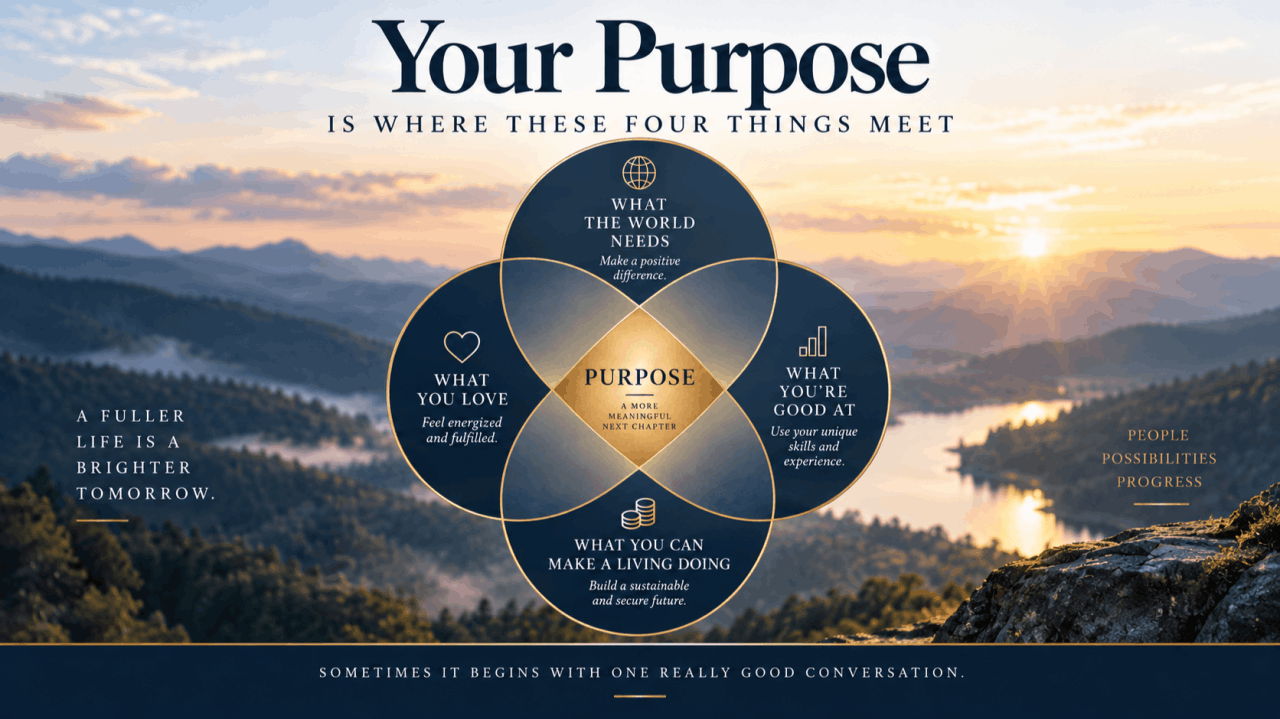
I keep coming back to the idea that purpose may exist at the intersection of four things:
What the world needs. What you love. What you’re good at. What you can make a living doing.
Any one of those things by itself isn’t necessarily enough.
You can be exceptionally good at something you no longer enjoy.
You can love something that was never meant to become your livelihood.
You can make an excellent living doing work that leaves you wondering whether any of it really matters.
And you can care deeply about solving a problem in the world without knowing how to turn that passion into something sustainable.
But when those four things begin to overlap?
That’s worth paying attention to.
I think sometimes we make the idea of “finding your purpose” much more intimidating than it needs to be.
Purpose doesn’t necessarily mean quitting your job, moving across the world, and dedicating your life to some enormous cause.
It can look much more ordinary—and much more personal.
It can mean creating good jobs for people in your community.
Building financial security for your family.
Solving a problem that makes someone’s life a little easier.
Creating a workplace where people are treated well.
Using decades of experience to mentor someone who’s just beginning.
Having enough control over your time to be present for the people you love.
Building something that belongs to you.
And yes, sometimes it can mean owning a business.
Not because business ownership itself is the purpose.
But because it can become the vehicle that allows someone to build a life around what matters to them.
I’ve talked with hundreds of people considering business ownership, and the reasons they begin exploring it are rarely just financial.
Of course money matters. A business has to make economic sense.
But underneath the numbers, there is usually something else.
Autonomy.
Legacy.
Flexibility.
Challenge.
Security.
Community.
A desire to build something.
A need to feel useful again.
Or simply the realization that they don’t want to spend the next ten or twenty years living exactly as they are today.
My job isn’t to tell someone what their purpose should be.
And it certainly isn’t to convince everyone that they should own a business.
It’s to ask enough questions to help someone understand what they’re really looking for—and then determine whether business ownership might help them get there.
Because the right opportunity shouldn’t just match your investment range or your résumé.
Ideally, it should align with who you are, what you’re good at, how you want to live, and what you want your next chapter to mean.
Instead of asking:
Maybe ask:
You may not have an immediate answer.
That’s okay.
Sometimes finding your next chapter doesn’t begin with an answer.
Sometimes it begins with one really good conversation.
One of the most common questions I hear is:
It sounds like a reasonable question.
It’s also one I can’t answer.
Because there is no universally “best” franchise.
There are businesses with strong economics. Growing industries. Recurring revenue. Attractive margins. Excellent leadership teams. Great franchisee support.
And I can look at all of those things.
But none of them tell me whether a business is right for you.
I’ve had conversations with people who were financially qualified for an opportunity, liked the business model, and saw the potential—and still shouldn’t have bought it.
Why?
Because the role of the owner didn’t match the life they wanted.
Maybe the business required more local marketing than they were comfortable doing.
Maybe managing a large team sounded miserable.
Maybe the hours conflicted with their family priorities.
Maybe they wanted something they could eventually manage in 10–15 hours a week, but the model really required a highly engaged owner.
Or sometimes, they simply couldn’t see themselves enjoying the business.
Those things matter.
A lot.
I’m Not Just Matching People With Franchises
Before I recommend a business, I want to understand the person considering it.
What are you trying to change?
What do you want your days to look like?
How much capital are you truly comfortable investing?
How involved do you want to be?
What are you good at?
What do you absolutely not want to do?
And perhaps most importantly:
That last question often tells me more than anything on a financial statement.
Sometimes My Job Is to Slow Someone Down
There is tremendous pressure around big decisions.
Find the opportunity.
Secure the territory.
Get through due diligence.
Sign the agreement.
Go.
But I don’t believe speed is the objective.
Clarity is.
My responsibility isn’t to convince someone to buy a franchise.
It’s to help them understand what they’re evaluating well enough to make a confident decision—whether that decision is yes or no.
And when the answer is yes?
Then I’m equally comfortable helping someone recognize when they’ve done the work, answered the important questions, and are ready to move forward.
There comes a point when more research doesn’t necessarily create more certainty.
Sometimes it just creates more research.
The Right Fit Happens at the Intersection
The strongest franchise matches I see usually sit at the intersection of three things:
A sound business model. A capable owner. A life that actually works with the business.
Remove any one of those, and an opportunity that looks fantastic on paper can become a very expensive mistake.
Get all three right?
That’s when things become interesting.
So if you’re exploring franchise ownership, don’t start by asking:
Start with a better question:
That’s a conversation worth having.
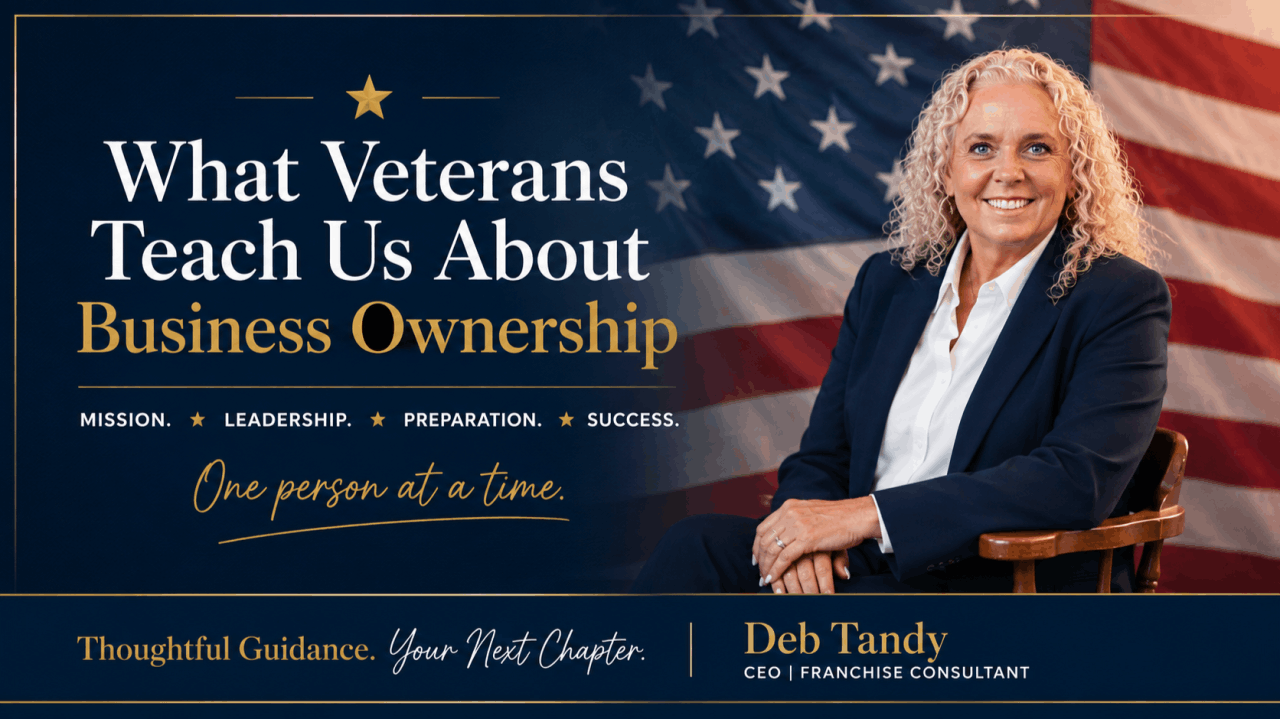
A few weeks ago, I had the privilege of mentoring military veterans who are exploring entrepreneurship and business ownership.
I went into those conversations hoping I could offer something useful.
I left inspired.
There is a natural connection between military service and entrepreneurship that goes far beyond leadership experience or a strong work ethic.
Veterans understand something every successful business owner eventually learns:
Mission matters.
Preparation matters.
Leadership matters.
Following a proven process matters.
In the military, you don’t succeed because you know everything.
You succeed because you’ve been trained to prepare, assess the situation, rely on your team, execute a plan, and adapt when circumstances change.
Business ownership isn’t all that different.
You Don’t Have to Know Everything
One of the biggest misconceptions I encounter among prospective business owners is the belief that they need to have all the answers before they begin.
They don’t.
In fact, some of the strongest leaders I’ve met are the first to ask questions.
They understand the difference between confidence and pretending to know something you don’t.
Great military leaders rely on training, systems, intelligence, experienced advisors, and the people around them.
Great business owners do the same.
That’s one of the reasons I believe veterans can be particularly well suited for franchise ownership.
A good franchise provides a proven system, but the system still requires someone willing to learn it, trust it, lead people, and execute consistently.
Veterans already understand the value of that discipline.
Adaptability Is a Business Skill
No business plan survives indefinitely without adjustment.
Markets change. Customers change. Employees change. Competitors change.
Successful owners don’t panic every time something doesn’t go according to plan.
They assess.
They adapt.
And they keep moving toward the objective.
Resilience isn’t about refusing to change course. It’s about staying committed to the mission while being willing to change the approach.
That’s a lesson that applies just as powerfully in business as it does in military service.
Leadership Is Still About People
Perhaps the most important similarity is this:
Leadership is ultimately about people.
You can have the best strategy, the best systems, the best technology, and the best opportunity in the market.
But at some point, you still have to inspire people to follow you.
You have to communicate expectations.
You have to build trust.
You have to make decisions when the answer isn’t obvious.
And you have to take responsibility for the outcome.
Those aren’t simply military skills.
They’re ownership skills.
Why Mentoring Matters to Me
These conversations also reminded me why mentoring has become such an important part of the work I do.
Sometimes people come to me looking for a business opportunity.
But often, they’re really standing at a crossroads.
They’re trying to determine what comes next.
My job isn’t to convince someone to buy a franchise.
It’s to ask good questions, provide perspective, help them understand their options, and give them the information they need to make a thoughtful decision.
Sometimes that journey leads to business ownership.
Sometimes it doesn’t.
Both can be successful outcomes.
Because good guidance isn’t about deciding someone’s future for them.
It’s about helping them see what’s possible—and giving them the confidence and information to choose their own next chapter.
To the veterans I’ve had the privilege of mentoring: thank you for the lessons you’ve already taught me.
And thank you for allowing me to be a small part of whatever comes next.
One person at a time.
When people first reach out to me, they usually want to talk about businesses.
They want to know which industries are growing. Which brands are performing well. How much they can make. What the investment looks like. Whether there is territory available in their market.
Those are all important questions.
But they aren’t the questions I want to start with.
I want to talk about you.
What do you want your life to look like three, five, or ten years from now?
How much flexibility do you want?
Do you want to be actively involved in the day-to-day business, or are you hoping to build something that can eventually operate with a strong team in place?
What does financial success actually mean to you?
More income? More control? Building equity? Creating generational wealth?
And perhaps most importantly:
Why are you considering business ownership in the first place?
Because that answer changes everything.
I can show two people the exact same franchise opportunity, and it could be an outstanding fit for one and completely wrong for the other.
That’s not a contradiction.
That’s the point.
One person may be leaving corporate America after 25 years and looking for greater control over their time.
Another may love their career but want to diversify their income and build an asset outside of it.
Someone else may be thinking about their children and creating something the family can build together.
And another person may simply be ready to bet on themselves.
Different goals require different businesses.
The investment matters. The economics matter. The territory matters. The leadership team, validation, systems, unit-level performance and growth potential all matter.
But none of those things can tell me whether a business fits your life.
You’re making a decision that will affect how you spend your time, where you focus your energy, how much risk you take, what you can potentially earn and, in many cases, what the next chapter of your life looks like.
That’s why I believe choosing a franchise should never begin with:
“Which franchise should I buy?”
It should begin with:
“What am I trying to build?”
Once we understand that, we can start evaluating opportunities through the right lens.
Instead of chasing the hottest concept or the brand everyone recognizes, we can ask better questions:
Does this business align with the way you want to work?
Can it support your financial goals?
Does the role of the owner fit your strengths?
Is the investment appropriate for your situation?
Can you see yourself doing this—not just for the first six months when everything is new, but years from now?
Those questions tend to lead to much better decisions.
This is an important part of the process that doesn’t get talked about enough.
My job isn’t to convince someone to buy a franchise.
Sometimes, after exploring the options and doing the homework, the right decision is not to move forward.
I consider that a successful outcome, too.
Because the goal isn’t to make a deal.
The goal is to help someone make a thoughtful, informed decision about their future.
That’s also why I don’t believe in recommending businesses based on what I would choose.
I’m not building your life.
You are.
My role is to ask the questions, help you understand the options, challenge assumptions when necessary, and give you the information and guidance you need to decide what is right for you.
The numbers matter.
The business model matters.
The opportunity matters.
But your life matters more.
And that’s why, for me, franchise consulting will always be about helping one person at a time find the opportunity that fits the future they’re trying to build.
Thoughtful Guidance. Your Next Chapter.
When people first begin exploring franchise ownership, one question naturally rises to the top:
“How much money can I make?”
It’s an important question. Of course it is.
But some of the most thoughtful franchise candidates I work with quickly realize that evaluating a business requires looking beyond a single number.
They start asking better questions.
Questions like:
“What does success look like after five years?”
Not just, Can this business make money? but What could I realistically build over time? Is there an opportunity to grow into multiple territories or locations? What does the business look like once it reaches maturity?
“What kind of owner thrives in this business?”
This is one of my favorites.
A strong franchise can still be the wrong franchise for a particular person. Understanding the skills, personality, leadership style, and level of involvement that tend to produce successful owners can tell you far more than simply asking whether the concept is “good.”
“What causes franchisees to struggle?”
Every business has challenges.
I want candidates to understand those challenges before they invest—not discover them afterward. What separates the franchisees who perform well from those who struggle? Are the differences related to sales, leadership, staffing, following the system, capitalization, or something else?
Sometimes the most valuable information isn’t found in the success stories. It’s found in understanding where things go wrong.
“How involved does the franchisor remain after opening?”
Training is important, but opening day isn’t the finish line.
What happens afterward?
Great candidates want to understand the ongoing relationship. What support exists for operations, marketing, technology, hiring, training, and growth? How does the franchisor help owners adapt as the business and market evolve?
And then there is a question I particularly like:
“Would you invest in this business today?”
Ask it during validation.
Ask existing franchisees. Ask people who understand the business. And listen carefully—not only to the answer, but to why they answer the way they do.
This may be the biggest mindset shift of all.
Once someone becomes excited about an opportunity, it’s very easy to start looking for information that confirms what they already hope is true.
That’s not the purpose of due diligence.
The goal is to understand the opportunity well enough to make an informed decision—including deciding not to move forward.
That’s why I encourage the people I work with to ask difficult questions.
Talk to franchisees who are thriving.
Talk to franchisees who have struggled.
Understand the economics.
Understand the expectations.
Understand the franchisor.
And perhaps most importantly, understand yourself.
Because the question isn’t simply:
“Is this a good franchise?”
It’s:
“Is this the right business for me, my goals, my family, my finances, and the future I want to build?”
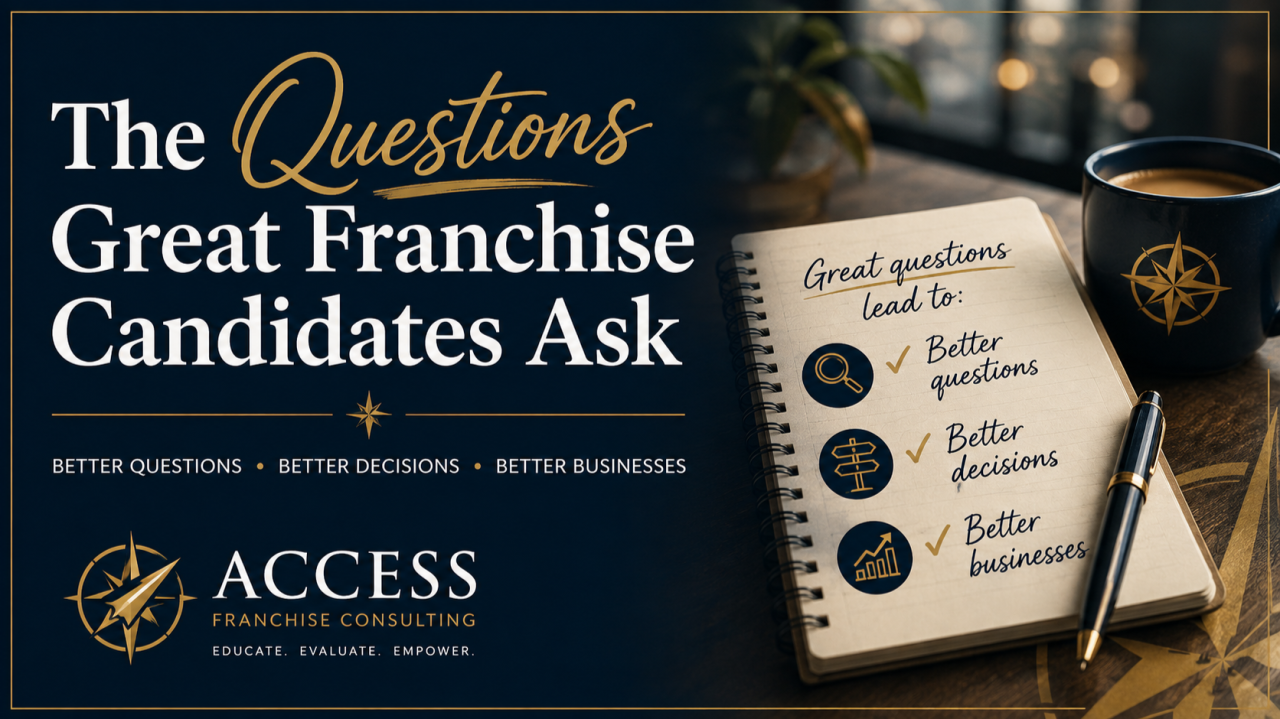
Great decisions begin with great questions.
And good franchise consultants don’t just provide answers.
We help people learn which questions to ask.
Because better questions lead to better decisions.
And better decisions lead to better businesses.
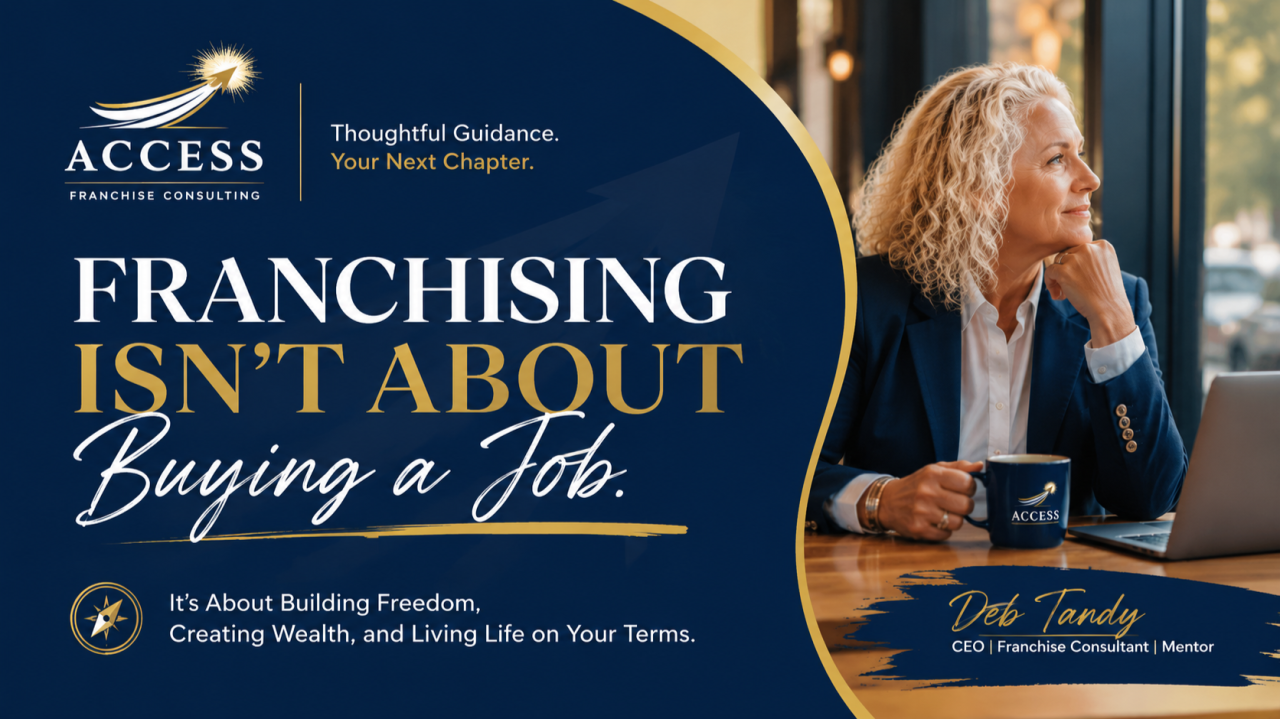
One of the biggest misconceptions I hear is:
“I don’t want to buy myself another job.”
Neither do I.
The best franchise systems aren’t designed to give you another paycheck.
They’re designed to give you a system.
You’re buying:
Will you work hard?
Absolutely.
But you’re not starting from a blank page.
Entrepreneurship doesn’t have to mean reinventing everything.
Sometimes it means following a proven blueprint while adding your own leadership and vision.
That’s a very different conversation.
One of the biggest obstacles to business ownership isn’t money.
It isn’t experience.
It isn’t fear.
It’s waiting.
People wait until interest rates improve.
Until the kids graduate.
Until work gets less stressful.
Until the economy feels safer.
Until they’re “ready.”
The problem?
Ready is a moving target.
I’ve met incredible people who have spent five years researching franchises…
…and others who carefully evaluated an opportunity, made an informed decision, and changed their lives within months.
Planning is wise.
Perfection is expensive.
Every year spent waiting is another year someone else is building equity, creating wealth, and gaining experience.
You don’t have to move recklessly.
But don’t confuse preparation with procrastination.
Sometimes the biggest risk is standing still.
Stop Looking for the “Perfect” Franchise
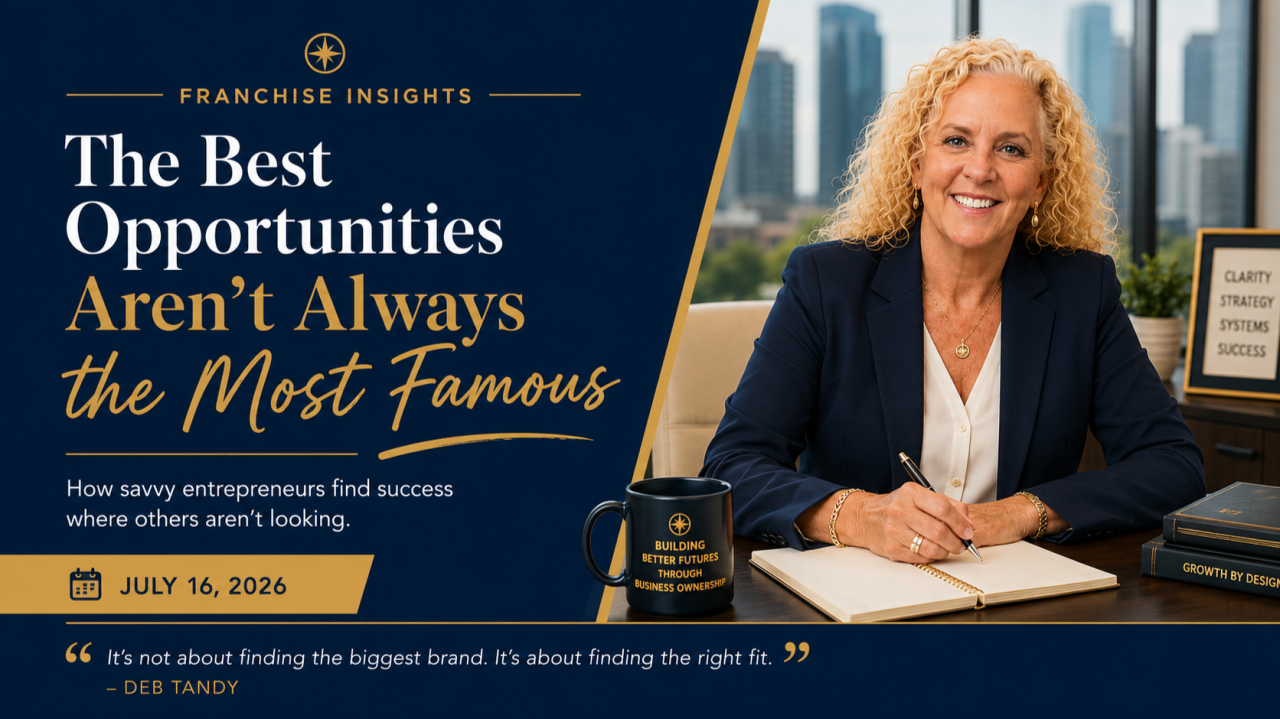
The best opportunity isn’t the one with the biggest name. It’s the one that’s built for your life.
Every week I speak with people who begin our conversation the same way:
“I think I want a Chick-fil-A.”
“I’ve always dreamed of owning a UPS Store.”
“Can you help me buy a Jersey Mike’s?”
My first question is almost always the same:
More often than not, the answer has little to do with business fundamentals. It’s based on familiarity. They’ve had a great customer experience. They recognize the brand. Or they’ve simply heard it’s successful.
There’s nothing wrong with that—but it’s not enough to make one of the biggest financial decisions of your life.
One of the biggest misconceptions about franchising is that the “best” franchise is the one everyone knows.
In reality, the best franchise is the one that aligns with your goals.
These questions matter far more than whether you’ve seen the company’s commercials.
The strongest opportunities aren’t always household names.
Some of the highest-performing franchise systems have little national recognition. They succeed because they have:
Those are the characteristics that create sustainable businesses.
My job isn’t to sell you a franchise.
It’s to help you make a smart decision.
Sometimes that means introducing someone to a brand they’ve never heard of.
Sometimes it means talking them out of a franchise they were convinced they wanted.
And occasionally, it means concluding that now isn’t the right time to buy any franchise at all.
That’s not a failed consultation—that’s a successful one.
Good decisions start with the right questions.
The due diligence process should never feel like a sales presentation. It should feel like education.
When we slow down, ask better questions, and evaluate opportunities objectively, people gain something far more valuable than a list of franchises:
Confidence.
Confidence that they’re making a decision based on facts—not marketing.
Confidence that the business fits their life—not someone else’s.
Confidence that they’re building a future they actually want.
Because the goal isn’t to find the most famous franchise.
The goal is to find the right business for you.
Many people begin their franchise search by looking at the biggest household names. While well-known brands certainly have advantages, some of the strongest franchise opportunities today are emerging brands that most consumers have yet to hear of.
Why? Because smart franchise investing is often about timing, market positioning, leadership quality, unit economics, and scalability—not simply brand recognition.
Some emerging brands offer stronger territories, lower entry costs, better franchisee support, and greater growth potential than mature systems that may already be heavily saturated. The key is identifying brands with strong fundamentals before they become overcrowded.
Of course, emerging brands also require careful due diligence. Franchise candidates should evaluate leadership experience, operational systems, support infrastructure, financial health, and long-term growth strategy before moving forward.
The goal isn’t simply to buy a recognizable brand. The goal is to identify a business model positioned for sustainable long-term success.
The franchise landscape is evolving quickly, and there are some incredibly strong opportunities in the market right now. If you’d like help navigating the space strategically, I’d be happy to connect.
Passion matters in business. But in franchising, systems matter just as much—if not more.
One of the advantages of franchising is that franchisees don’t have to reinvent the wheel. Strong franchise systems provide operational structure, training, marketing guidance, vendor relationships, and ongoing support that can significantly reduce the learning curve associated with starting a business from scratch.
The most successful franchisees are often coachable operators who are willing to follow proven systems while executing consistently. In many cases, they are not industry experts before entering the business. Instead, they succeed because they understand leadership, process, and execution.
This is especially important in today’s environment, where operational discipline and adaptability can make the difference between long-term growth and constant frustration. Great systems create consistency—for both franchisees and customers.
Franchise candidates should absolutely choose businesses they believe in. But they should also evaluate the strength of the operating model, support structure, financial performance, and scalability before making a decision.
Finding the right franchise is about much more than liking a brand—it’s about aligning the opportunity with your goals, skill set, lifestyle, and long-term vision.
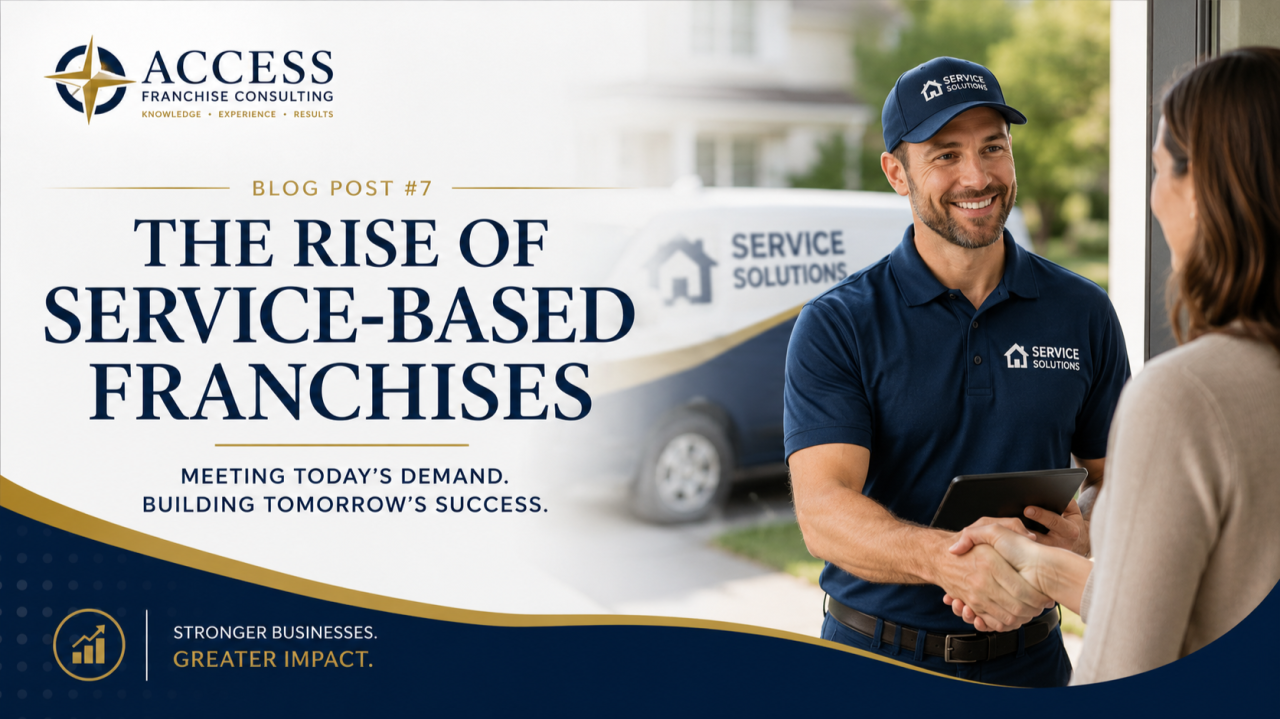
Over the last several years, we’ve seen a major shift toward service-based franchise models—and for good reason. Many of today’s fastest-growing franchise brands are centered around home services, health and wellness, senior care, restoration, mobile concepts, education, and business services.
These models often offer lower overhead, reduced inventory requirements, and greater operational flexibility compared to traditional brick-and-mortar businesses. In many cases, they can also scale more efficiently while meeting growing consumer demand in essential and recession-resistant sectors.
Another key factor driving this trend is lifestyle. Many entrepreneurs today are looking for businesses that provide stronger cash flow potential without the complexity of large retail footprints or heavy staffing models. Service-based franchises often align well with those goals.
That said, not all service models are created equal. The strongest brands combine operational simplicity with strong support systems, clear differentiation, and scalable unit economics. As always, proper due diligence and brand evaluation remain critical.
If you’re exploring franchise ownership and want to better understand where the market is heading, I’m always happy to share insights and discuss opportunities that align with your goals.
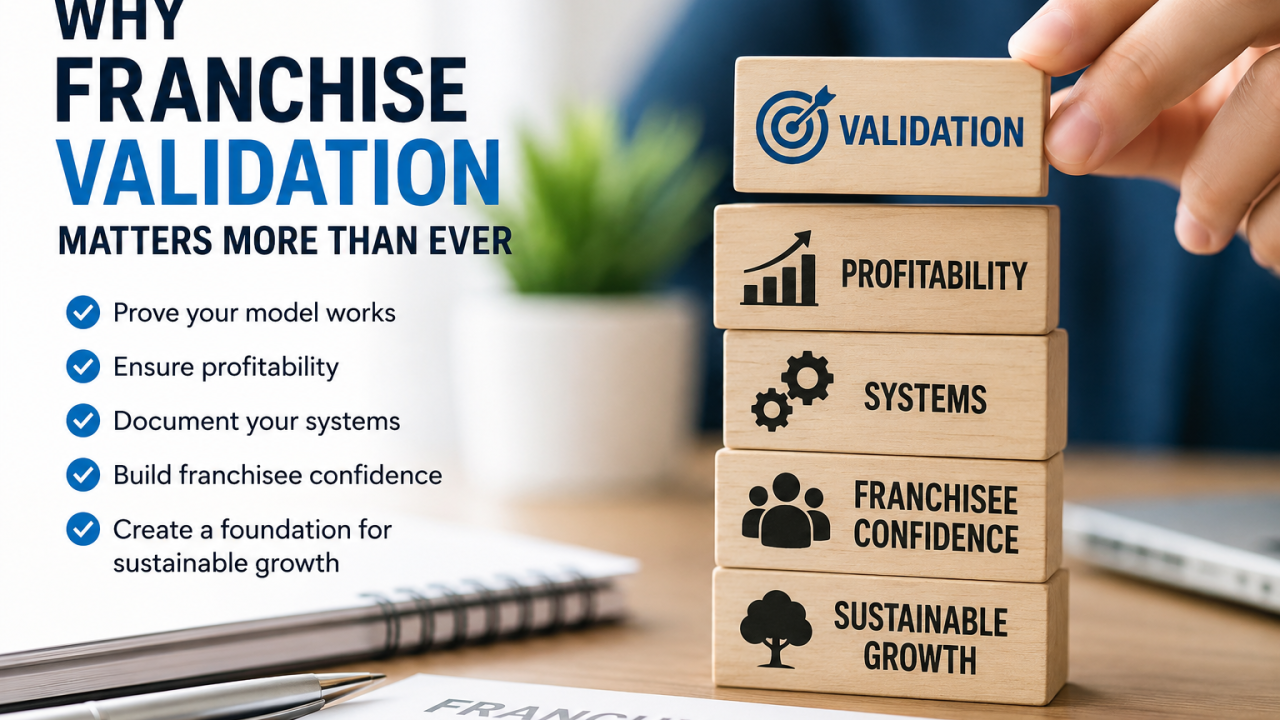
One of the biggest mistakes emerging franchisors make is assuming that a strong concept automatically translates into a scalable franchise system. In today’s market, validation matters more than ever. Franchise candidates are more informed, more cautious, and asking better questions than they did even five years ago.
A successful franchise isn’t just built on a good product or exciting brand story. It requires operational consistency, strong unit economics, documented systems, leadership alignment, and a real understanding of what franchisees need to succeed. Brands that skip these foundational steps often struggle with franchisee turnover, operational breakdowns, and stalled growth.
The strongest franchise systems today are focusing less on “selling units” and more on building sustainable infrastructure. They are proving profitability at the unit level, refining support systems, and ensuring franchisees can realistically execute the model before accelerating expansion.
Franchising can be an incredible growth strategy—but only when the foundation is strong enough to support scale. If you’re considering franchising your business—or evaluating whether your current model is truly ready to scale—I’d be happy to have a conversation.
A lot of people ask me, “Do you think I’m ready to own a franchise?” And the answer has less to do with timing—and more to do with mindset.
You don’t need to have all the answers. You don’t need to have owned a business before. But you do need a few key things:
Franchising isn’t about reinventing the wheel—it’s about executing a model that already works. The people who succeed are the ones who commit to the process, stay coachable, and take ownership of their results.
If you’re asking the question, there’s a good chance you’re closer than you think.
If you’d like an honest, no-pressure conversation about whether franchising is the right next step for you, I’m always happy to connect.
The franchise landscape is constantly evolving, and right now, there are a few clear trends shaping where the smartest investments are going.
If you’re considering franchising, it’s not just about what’s popular—it’s about what’s sustainable and aligned with where the market is going.
If you’d like to explore which of these trends might align with your goals, I’d be glad to share what I’m seeing in real time across the market.
The biggest mistake I see first-time franchise buyers make? They fall in love with the brand before they understand the business model.
A brand can be exciting—great marketing, strong presence, maybe even something you personally love. But that doesn’t mean it’s the right fit for your goals, your lifestyle, or your financial expectations.
Franchising is ultimately about alignment.
The strongest decisions happen when you evaluate opportunities objectively—looking at the numbers, the support, the scalability, and the long-term viability—not just the surface appeal.
The right franchise isn’t the one that looks the best. It’s the one that works best for you.
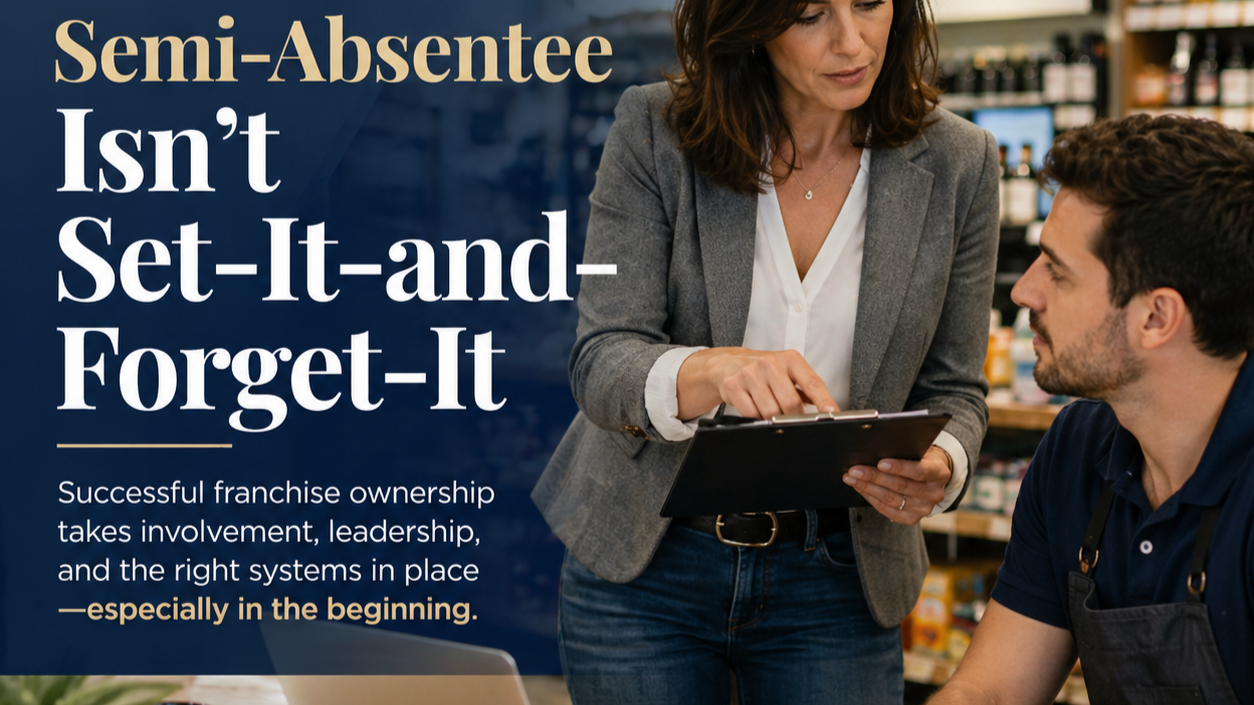
One of the most common things I hear from prospective franchise owners is: “I want something semi-absentee.” And I understand why—it sounds like the ideal scenario. You invest, hire a manager, and the business runs without you.
But here’s the reality: most successful franchise owners are not hands-off, especially in the beginning.
Semi-absentee ownership is possible, but it’s earned—not bought. The most successful franchisees I work with are engaged early, learning the business, building culture, and putting the right systems and people in place. Once that foundation is solid, they can step back strategically—not disappear entirely.
If your goal is flexibility, scalability, and eventually reducing your day-to-day involvement, franchising can absolutely provide that—but only if you go in with the right expectations.
The landscape for business ownership is shifting—and franchising is right at the center of that change. In 2026, we’re seeing a unique combination of economic conditions, workforce trends, and consumer behavior that are creating real opportunity for aspiring business owners.
More professionals are stepping away from traditional corporate paths in search of control, flexibility, and long-term wealth building. At the same time, franchise systems have evolved to offer stronger support, better training, and more scalable models than ever before. For many, it’s no longer about starting from scratch—it’s about starting smart.
We’re also seeing growth in industries that are both essential and resilient. Home services, health and wellness, pet care, and children’s education continue to expand as demand remains steady regardless of broader market conditions. These are not just trends—they’re long-term shifts in how people spend their time and money.
For the right person, franchising offers a way to step into business ownership with a proven model, built-in support, and a clearer path forward. The key is finding the right fit—not just financially, but personally and professionally.
If you’ve been considering business ownership, this may be the moment to take a closer look.
My goal is to give you the knowledge, perspective and resources you need to make confident decisions. Soon, you'll find more interviews, videos, engaging insights and practical information designed to help you move forward with clarity.
Hear inspiring discussions with entrepreneurs, franchisors, and industry experts on business growth, leadership, and making confident decisions.
Learn MoreA simple look at the different franchise models and how to decide which approach may suit you.

Learn MoreKey questions and practical considerations to explore before making an important investment.

Learn MoreHear perspectives on preparation, planning and building a business with long-term potential.
WATCH MORE →Turn your initial ideas into practical next steps with a clearer and more confident approach.
WATCH MORE →Explore the information that can help you compare opportunities and move forward confidently.
WATCH MORE →